


Large-Scale Aluminium Fabrication & Precision Machining
Expanding Manufacturing Capabilities Through Collaborative Engineering
Project Overview
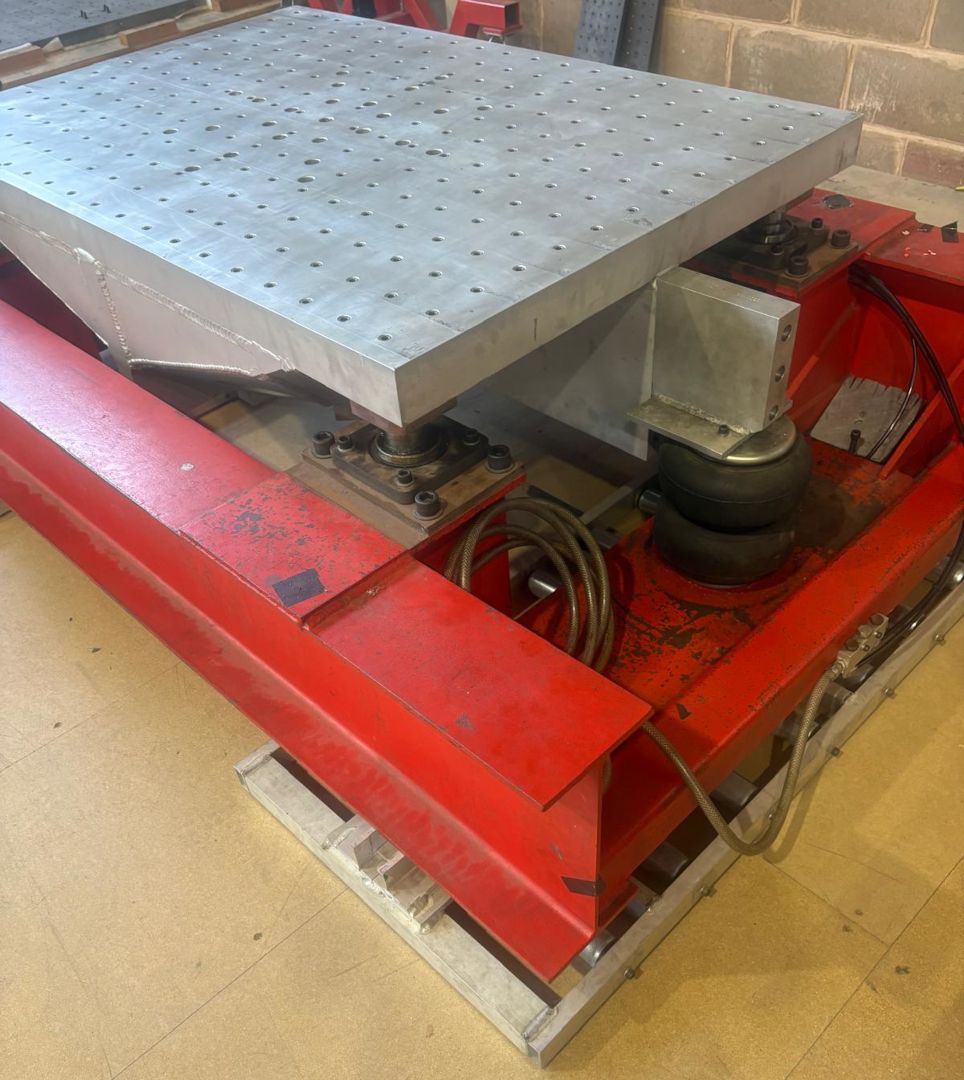
Progress Engineering was approached by our sister company, James Camden Engineering, to undertake a substantial aluminium fabrication and machining project for a new client.
The project presented an opportunity to demonstrate the combined engineering capabilities of the group, bringing together specialist fabrication knowledge, advanced welding techniques and large-capacity precision machining to deliver a complex manufactured assembly.
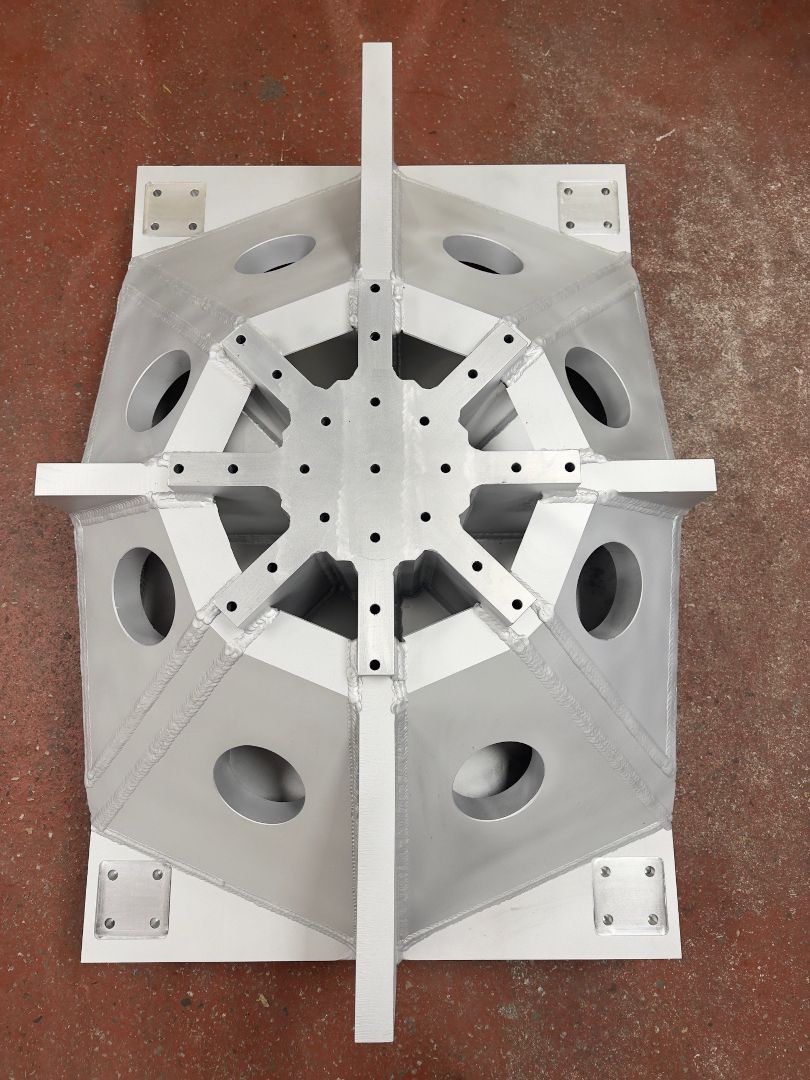
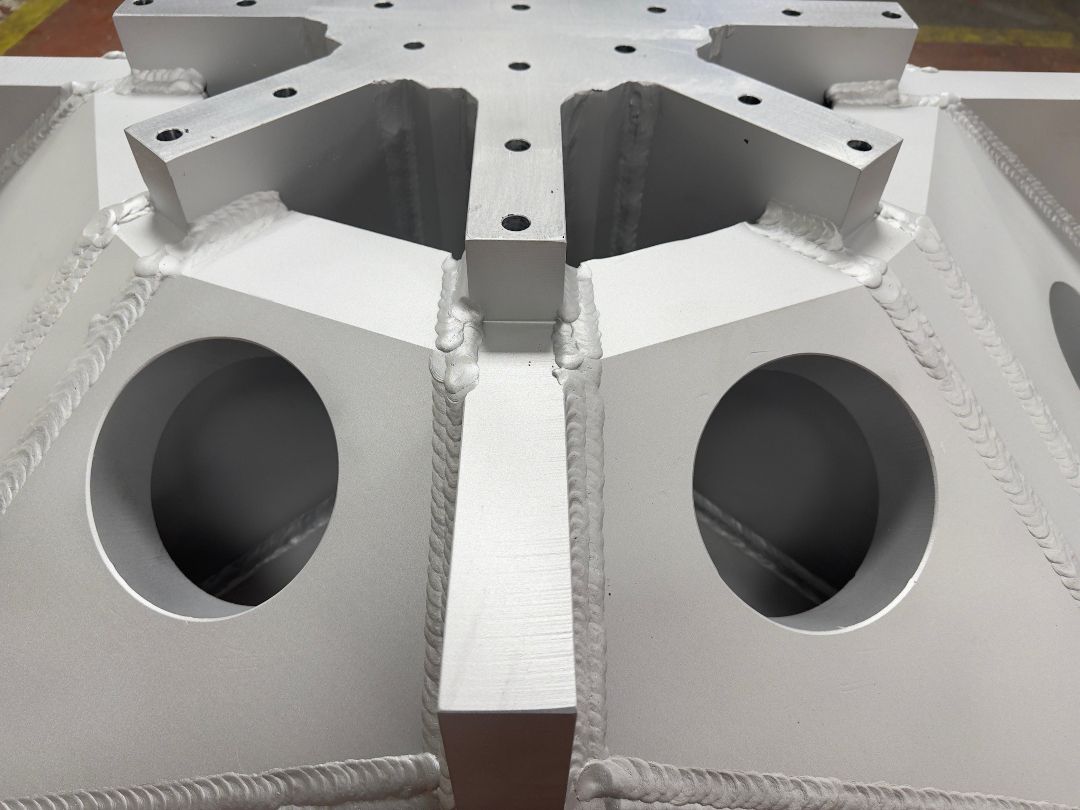
A key challenge was the significant increase in material thickness compared with our previous aluminium fabrication work. While our established experience had predominantly involved aluminium sections between 6 mm and 8 mm thick, this project required the successful fabrication of components manufactured from aluminium plate ranging from 50 mm to 75 mm in thickness.
This required a different approach to welding, fabrication planning and subsequent machining, demonstrating our ability to adapt existing manufacturing processes to meet new and more demanding engineering requirements.
The Challenge
The substantial material thickness introduced a number of technical considerations beyond those encountered in our more conventional aluminium fabrication projects.
Welding thick-section aluminium requires careful consideration of heat input, weld penetration, distortion and the overall integrity of the finished assembly.
Our established aluminium welding processes had primarily utilised TIG welding, which is well suited to thinner sections and applications requiring precise control. However, the increased material thickness and scale of this project meant that a different welding process was necessary to achieve an efficient and practical manufacturing solution.
The project also required the completed welded assembly to undergo precision machining, ensuring that critical features and dimensions could be achieved following fabrication.
Successfully delivering the project therefore required a coordinated approach between welding, fabrication and machining, with consideration given to the complete manufacturing sequence from the outset.
Our Engineering Solution
Working in collaboration with James Camden Engineering, our team reviewed the manufacturing requirements and developed an appropriate fabrication and machining strategy.
One of the most significant developments was the transition from TIG to MIG welding for the heavy-section aluminium components.
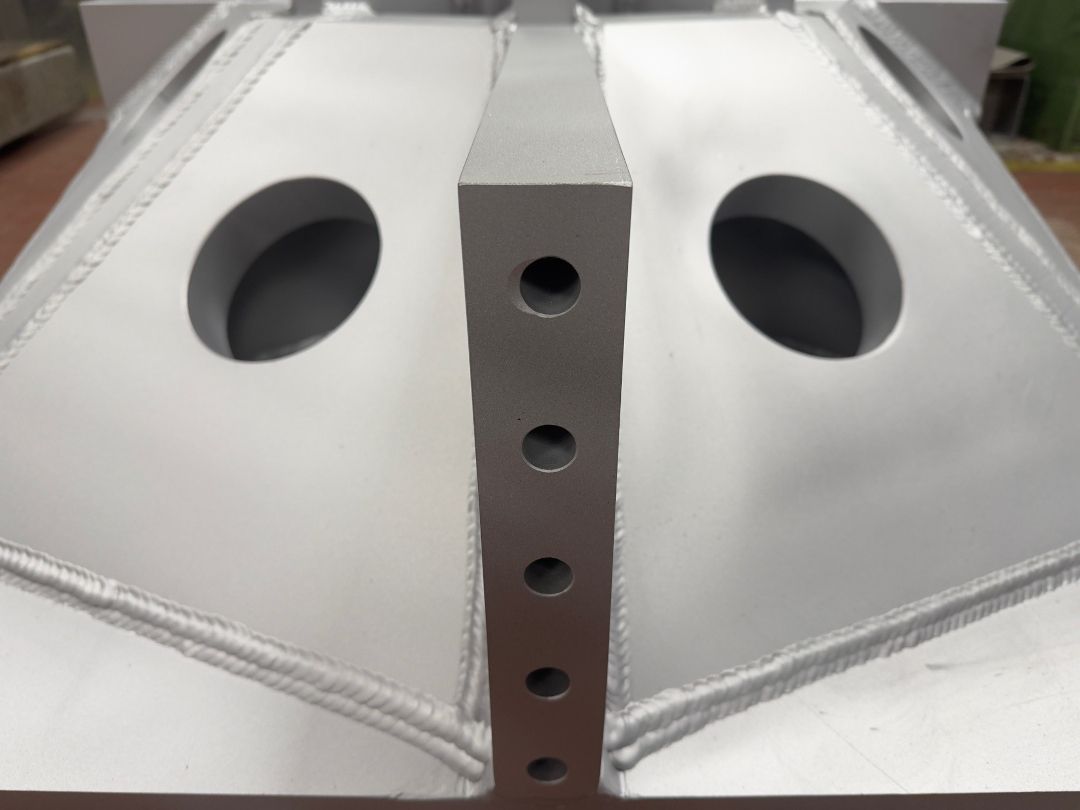
The adoption of MIG welding provided a more suitable process for the increased material thickness, offering higher deposition rates and greater productivity when manufacturing substantial welded assemblies.
This change represented an important development in our aluminium fabrication capabilities, enabling us to undertake significantly heavier and more demanding aluminium work than had previously formed part of our regular manufacturing activities.
The fabrication process required careful planning to manage the challenges associated with thick aluminium sections, particularly the potential for thermal distortion and dimensional movement during welding.
By considering the subsequent machining requirements during the fabrication stage, the team was able to establish a manufacturing sequence that accommodated the needs of both processes.
Large-Capacity Precision Machining
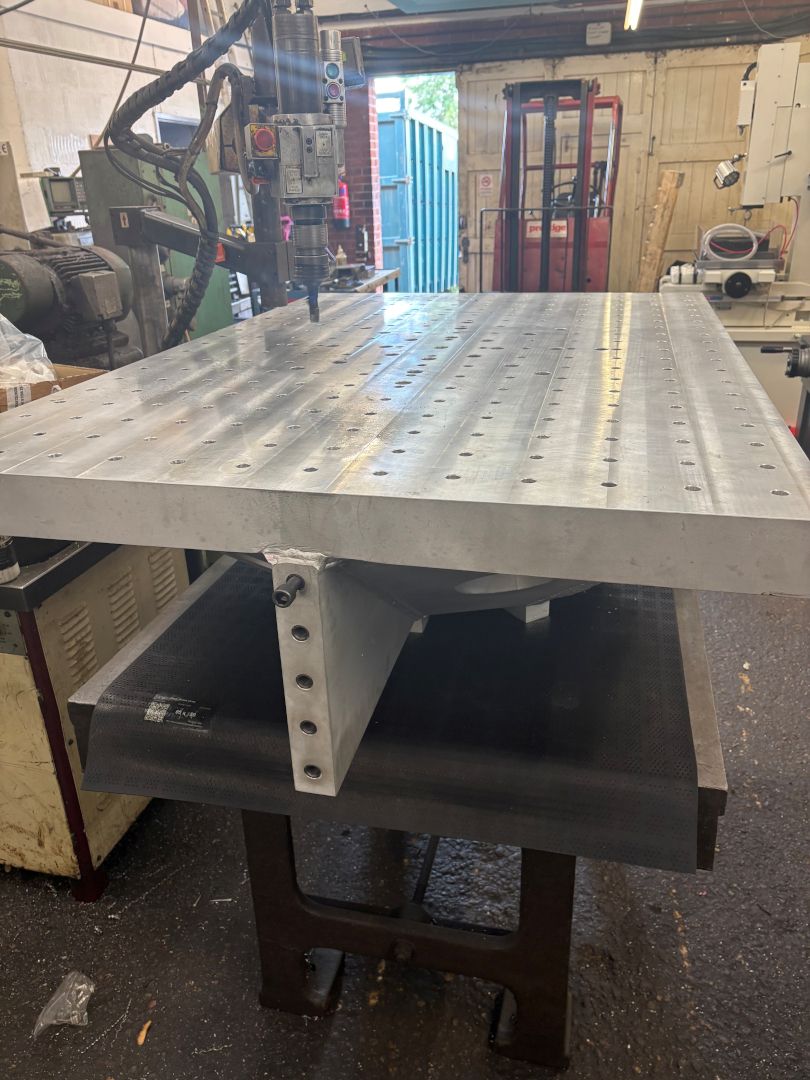
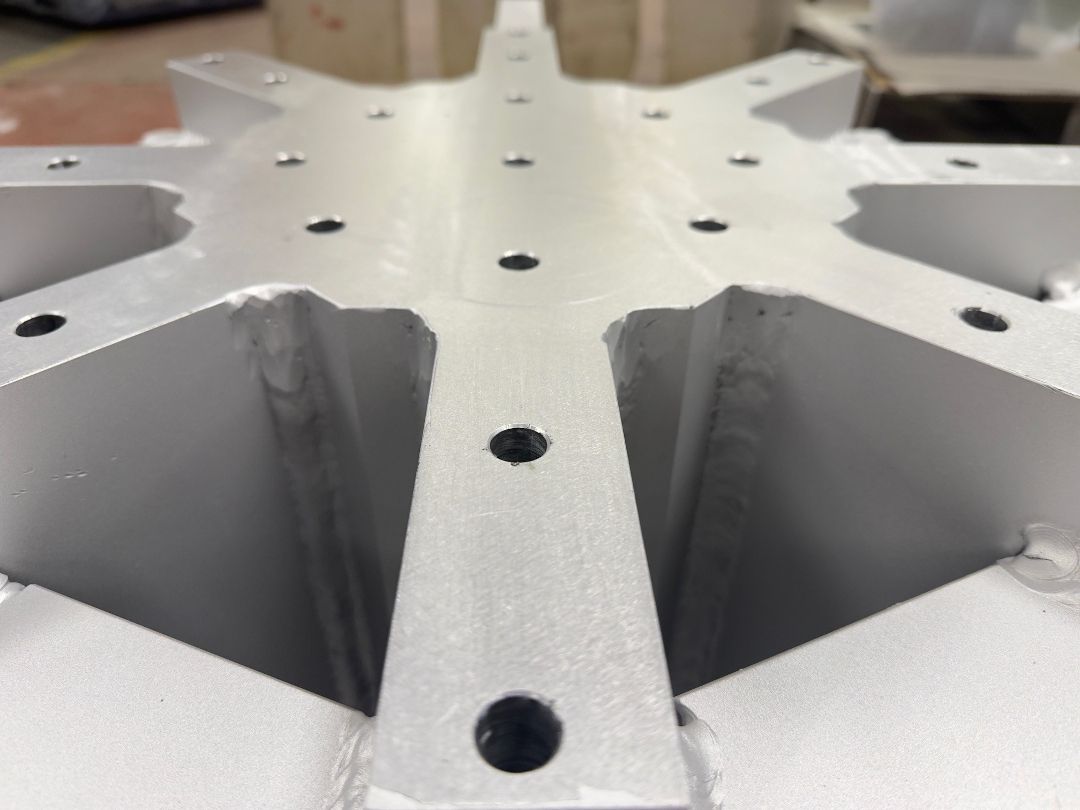
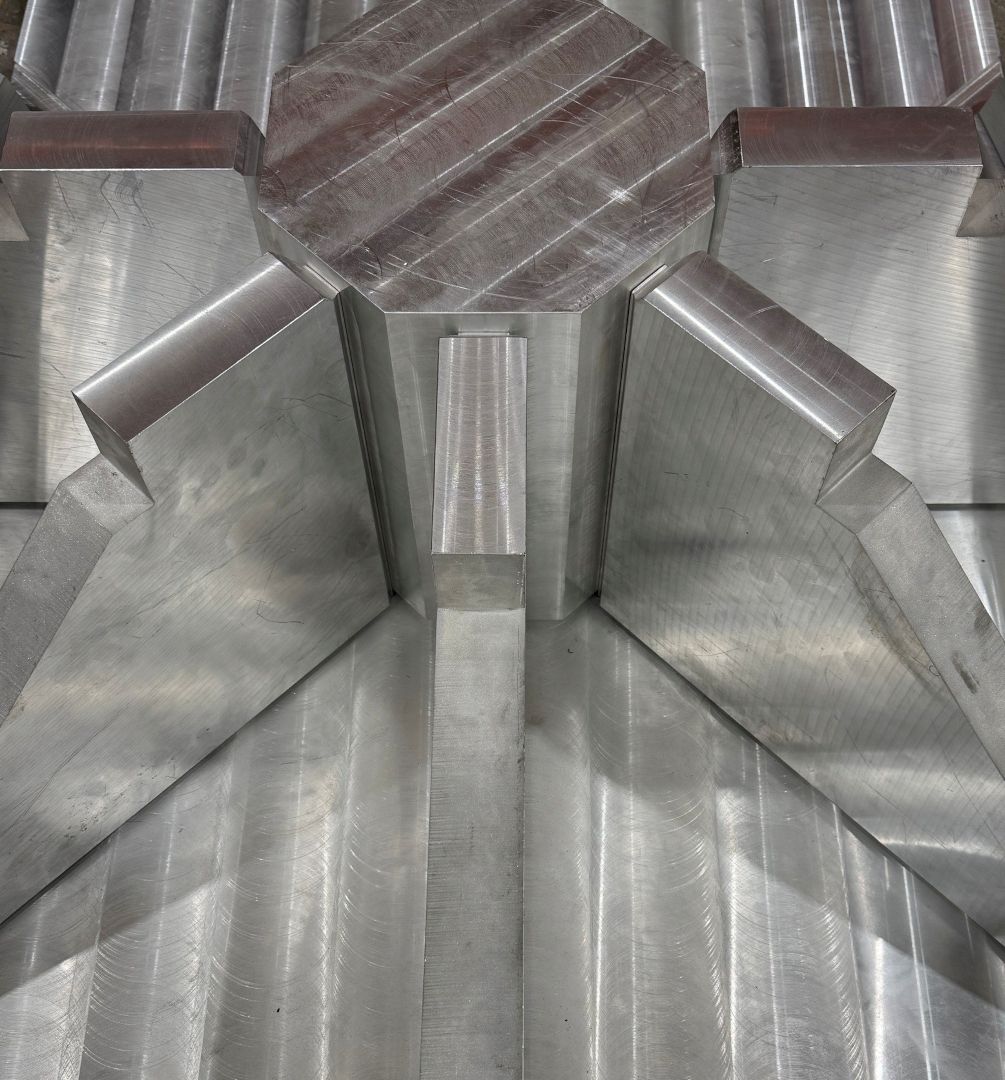
Following completion of the welding and fabrication operations, the entire assembly was transferred for post-weld machining using one of our large vertical boring machines.
This was a critical stage of the manufacturing process, allowing important machined features to be finished after welding rather than relying solely on the dimensional accuracy of the fabricated assembly.
Post-weld machining provides a number of advantages for large fabricated components, particularly where the welding process can introduce dimensional changes.
Our large-capacity vertical boring equipment enabled the assembly to be machined as a complete unit, providing the capability to achieve the required dimensional accuracy and finished features on a substantial fabricated structure.
The combination of heavy aluminium fabrication and large-scale precision machining allowed us to provide a more complete manufacturing solution, reducing the need for the client to coordinate multiple specialist suppliers.
Collaborative Manufacturing Across the Group
A particularly important aspect of this project was the close collaboration between Progress Engineering and our sister company, James Camden Engineering.
By drawing on the combined manufacturing resources, engineering knowledge and production capabilities available across the group, we were able to take on a project that required a broader range of expertise than a conventional fabrication or machining contract.
This collaborative approach enabled the project to benefit from:
- Shared engineering expertise: Combining technical knowledge and manufacturing experience across both businesses.
- Expanded fabrication capabilities: Developing our processes to accommodate significantly thicker aluminium sections.
- Specialist machining capacity: Utilising our large vertical boring equipment to finish the welded assembly.
- Coordinated project delivery: Aligning fabrication and machining requirements throughout the manufacturing process.
- Greater manufacturing flexibility: Using the wider group’s capabilities to respond to a new client’s specialist requirements.
This approach demonstrates the practical advantages of operating within a wider engineering group, where complementary skills, equipment and resources can be brought together to deliver more complex manufacturing projects.
The Outcome
The project demonstrated Progress Engineering’s ability to adapt and expand its manufacturing capabilities in response to new technical challenges.
The move from TIG to MIG welding for heavy-section aluminium represented a significant step forward in our fabrication capability, allowing us to undertake work involving material thicknesses considerably greater than those previously handled.
The successful integration of fabrication and subsequent large-capacity vertical boring operations also demonstrated our ability to manage complex manufacturing sequences involving multiple specialist processes.
Importantly, the project strengthened the working relationship between Progress Engineering and James Camden Engineering, providing a practical example of how collaboration across the group can deliver an effective manufacturing solution for new customers.
Engineering Value
This project highlights our commitment to developing manufacturing processes, investing in technical capability and responding positively to challenging engineering requirements.
Rather than being restricted by our existing fabrication methods, we adapted our approach to accommodate a substantially different material specification, combining heavy-section aluminium welding with precision post-fabrication machining.
By bringing together the complementary capabilities of Progress Engineering and James Camden Engineering, we demonstrated the strength of collaborative manufacturing and our ability to deliver complex, large-scale engineered assemblies through a coordinated group approach.
Large-Scale Aluminium Fabrication & Precision Machining
Expanding Manufacturing Capabilities Through Collaborative Engineering
Project Overview
Progress Engineering was approached by our sister company, James Camden Engineering, to undertake a substantial aluminium fabrication and machining project for a new client.
The project presented an opportunity to demonstrate the combined engineering capabilities of the group, bringing together specialist fabrication knowledge, advanced welding techniques and large-capacity precision machining to deliver a complex manufactured assembly.
A key challenge was the significant increase in material thickness compared with our previous aluminium fabrication work. While our established experience had predominantly involved aluminium sections between 6 mm and 8 mm thick, this project required the successful fabrication of components manufactured from aluminium plate ranging from 50 mm to 75 mm in thickness.
This required a different approach to welding, fabrication planning and subsequent machining, demonstrating our ability to adapt existing manufacturing processes to meet new and more demanding engineering requirements.
The Challenge
The substantial material thickness introduced a number of technical considerations beyond those encountered in our more conventional aluminium fabrication projects.
Welding thick-section aluminium requires careful consideration of heat input, weld penetration, distortion and the overall integrity of the finished assembly.
Our established aluminium welding processes had primarily utilised TIG welding, which is well suited to thinner sections and applications requiring precise control. However, the increased material thickness and scale of this project meant that a different welding process was necessary to achieve an efficient and practical manufacturing solution.
The project also required the completed welded assembly to undergo precision machining, ensuring that critical features and dimensions could be achieved following fabrication.
Successfully delivering the project therefore required a coordinated approach between welding, fabrication and machining, with consideration given to the complete manufacturing sequence from the outset.
Our Engineering Solution
Working in collaboration with James Camden Engineering, our team reviewed the manufacturing requirements and developed an appropriate fabrication and machining strategy.
One of the most significant developments was the transition from TIG to MIG welding for the heavy-section aluminium components.
The adoption of MIG welding provided a more suitable process for the increased material thickness, offering higher deposition rates and greater productivity when manufacturing substantial welded assemblies.
This change represented an important development in our aluminium fabrication capabilities, enabling us to undertake significantly heavier and more demanding aluminium work than had previously formed part of our regular manufacturing activities.
The fabrication process required careful planning to manage the challenges associated with thick aluminium sections, particularly the potential for thermal distortion and dimensional movement during welding.
By considering the subsequent machining requirements during the fabrication stage, the team was able to establish a manufacturing sequence that accommodated the needs of both processes.
Large-Capacity Precision Machining
Following completion of the welding and fabrication operations, the entire assembly was transferred for post-weld machining using one of our large vertical boring machines.
This was a critical stage of the manufacturing process, allowing important machined features to be finished after welding rather than relying solely on the dimensional accuracy of the fabricated assembly.
Post-weld machining provides a number of advantages for large fabricated components, particularly where the welding process can introduce dimensional changes.
Our large-capacity vertical boring equipment enabled the assembly to be machined as a complete unit, providing the capability to achieve the required dimensional accuracy and finished features on a substantial fabricated structure.
The combination of heavy aluminium fabrication and large-scale precision machining allowed us to provide a more complete manufacturing solution, reducing the need for the client to coordinate multiple specialist suppliers.
Collaborative Manufacturing Across the Group
A particularly important aspect of this project was the close collaboration between Progress Engineering and our sister company, James Camden Engineering.
By drawing on the combined manufacturing resources, engineering knowledge and production capabilities available across the group, we were able to take on a project that required a broader range of expertise than a conventional fabrication or machining contract.
This collaborative approach enabled the project to benefit from:
- Shared engineering expertise: Combining technical knowledge and manufacturing experience across both businesses.
- Expanded fabrication capabilities: Developing our processes to accommodate significantly thicker aluminium sections.
- Specialist machining capacity: Utilising our large vertical boring equipment to finish the welded assembly.
- Coordinated project delivery: Aligning fabrication and machining requirements throughout the manufacturing process.
- Greater manufacturing flexibility: Using the wider group’s capabilities to respond to a new client’s specialist requirements.
This approach demonstrates the practical advantages of operating within a wider engineering group, where complementary skills, equipment and resources can be brought together to deliver more complex manufacturing projects.
The Outcome
The project demonstrated Progress Engineering’s ability to adapt and expand its manufacturing capabilities in response to new technical challenges.
The move from TIG to MIG welding for heavy-section aluminium represented a significant step forward in our fabrication capability, allowing us to undertake work involving material thicknesses considerably greater than those previously handled.
The successful integration of fabrication and subsequent large-capacity vertical boring operations also demonstrated our ability to manage complex manufacturing sequences involving multiple specialist processes.
Importantly, the project strengthened the working relationship between Progress Engineering and James Camden Engineering, providing a practical example of how collaboration across the group can deliver an effective manufacturing solution for new customers.
Engineering Value
This project highlights our commitment to developing manufacturing processes, investing in technical capability and responding positively to challenging engineering requirements.
Rather than being restricted by our existing fabrication methods, we adapted our approach to accommodate a substantially different material specification, combining heavy-section aluminium welding with precision post-fabrication machining.
By bringing together the complementary capabilities of Progress Engineering and James Camden Engineering, we demonstrated the strength of collaborative manufacturing and our ability to deliver complex, large-scale engineered assemblies through a coordinated group approach.


Contact us ...


Unit G, 36 Normandy Way,
Walker Lines Industrial Estate,
Bodmin,
Cornwall,
PL31 1EX
© Copyright – Progress Engineering Limited 2025
Progress Engineering Limited,
Unit G, 36 Normandy Way,
Walker Lines Industrial Estate,
Bodmin,
Cornwall,
PL31 1EX
© Copyright – Progress Engineering Limited 2025